Refining Our Economic Pressure:
#BC2025: Sharpening Our Weapons - Targeted Boycotts and the General Strike

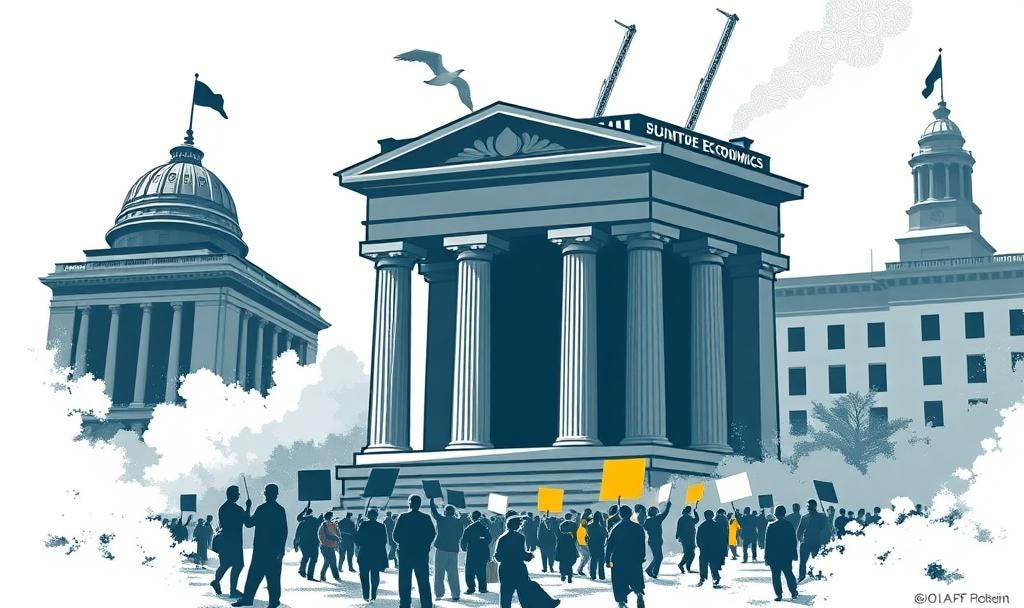
The #BC2025 movement is gaining momentum, fueled by the conviction that the real culture war is a class war, and our target is the super-wealthy oligarchy. We've laid the groundwork with broad boycotts against corporate media, subscription services, and chain establishments. These actions are crucial steps in building our collective power and disrupting the flow of wealth upwards. If you're new to the movement, I strongly suggest reading the BOYCOTT 2025 Introduction for the big-picture view
Now, it's time to discuss how we can escalate our economic pressure, making our actions more targeted and considering the most powerful tool available: the general strike. This post will explore the strategy behind more specific boycotts and examine the potential role of a general strike in our fight to take down the oligarchy.
The Power of Specific Boycotts
Our initial actions have focused on broad categories, encouraging everyone to participate as much as possible. This approach builds awareness and habit. However, to truly "starve the oligarchy layer by layer", we need to move beyond general categories and identify specific points of leverage.
Why More Specific Targeting?
Targeted boycotts focus pressure on entities directly connected to the oligarchy or those whose revenue streams are critical to maintaining their power. Instead of just avoiding "corporate fast food," for example, a targeted approach might identify specific chains or even their major suppliers or parent companies.
This requires research and coordination. It means identifying:
• Key Corporations:
Which companies are major players in the sectors we've identified? Who owns them, and how are they linked to the oligarchy?
• Vulnerable Revenue Streams:
Where can our collective withdrawal of support hurt them the most? Is it advertising revenue (as discussed regarding social media), direct sales, or other forms of economic activity?
•High-Visibility Targets:
Boycotts against well-known brands can generate significant public awareness and pressure, amplifying our message.
By focusing our efforts, our impact becomes clearer and more measurable. It allows us to communicate precisely why we are targeting a specific company or product – connecting it directly back to the class war and the insatiable greed of the super-wealthy.
Remember, the counter-action is just as important: Shop only at local markets, home goods stores, and restaurants. This redirects wealth into our communities and starves the corporate giants.
Considering the Ultimate Lever: The General Strike
Beyond individual boycotts and even coordinated consumption shifts, there exists a form of collective action with the potential to shake the foundations of power: the general strike.
What is a General Strike?
Most sources define a general strike as a temporary stoppage of work across many industries in a specific area (city, region, or nation). Crucially, unlike a typical strike against an employer over wages or conditions, the target of a general strike is the government or the economic system itself. The goal is to cripple the economy and pressure policymakers. While a "generalized strike" might involve multiple industries, a "general strike" often implies a broader, more impactful stoppage.
Why Consider a General Strike for #BC2025?
General strikes are extremely threatening to those in power because they represent a direct challenge. When successful, they demonstrate that the power of the people can overcome the control sought by the 1%. Historically, even general strikes that didn't fully achieve their immediate goals have built incredible worker solidarity and forced governments to grant concessions or make alterations to policies in a significant percentage of cases. They can dramatically highlight unpopular reforms and increase public awareness and support by demonstrating broad grievances.
Research on nonviolent resistance suggests that general strikes are "probably one of the most powerful, if not the most powerful, single method". While mass participation is key (some research points to a "3.5% rule" where movements involving this percentage of the population are likely to succeed), nonviolent methods often have more options for participation and are more visible, making coordination easier. General strikes can also have direct electoral consequences, leading to a significant decline in vote share for incumbent governments that face them.
Lessons from History:
• The Seattle General Strike of 1919 was a solidarity strike that temporarily shut down the city, demonstrating powerful worker unity, though it ultimately faced strong suppression and contributed to the Red Scare backlash.
• The British General Strike of 1926 involved a coalition of unions seeking better conditions for miners and aimed to pressure the government, showing a collective response to perceived injustices. While not fully "general" by one definition, it was a significant labor action.
• The Oakland General Strike of 1946 saw over 100,000 workers shut down the city to pressure an anti-union business association, highlighting rank-and-file power, but also demonstrating how internal union politics and external pressure can undermine a strike. It, like Seattle, led to anti-labor legislative backlash (Taft-Hartley Act).
• General strikes have played a role in political transitions, for instance, giving decisive impetus to the military's retreat and changing the relationship between political parties and social movements in Uruguay in 1984. Unions also played a large part in the Spanish Revolution (1936-1939), with aims extending beyond wages to changing the form of government/economy.
Challenges and Considerations:
General strikes are difficult to coordinate and sustain. They require significant resources to support striking workers. Workers can face legal risks. As seen in Seattle and Oakland, they can provoke fierce reactions from authorities and lead to setbacks for the labor movement. Unity among participants and clear, shared goals are critical for success. There is also a personal cost involved for those who strike.
A general strike within the #BC2025 movement would need to be strategically considered, understanding its potential to inflict economic pressure and demonstrate mass opposition, while also preparing for potential pushback and ensuring the solidarity and resources necessary for a prolonged action if required. It is a powerful, but complex, tool.
Connecting the Strategy to #BC2025
Both targeted boycotts and the potential for a general strike are about applying economic pressure to effect change. They are tactics in the larger class war against the oligarchy. Boycotts aim to reduce their revenue and influence, while a general strike aims to halt the economic machinery that maintains their power. Both require collective action, perseverance, and a clear focus on blaming the problems on the super-wealthy and inviting all working people to join.
We Are the Cavalry
We cannot wait for someone else to fix this. By strategically applying pressure – through refined, targeted boycotts now, and potentially considering the power of a general strike in the future – we leverage the power of the people.
The path forward involves continued pressure. Refining our boycott strategy to target specific weak points of the oligarchy's economic empire, coupled with an understanding of the potential impact and challenges of a general strike, positions the #BC2025 movement for escalating effectiveness. Our unity, our economic power, and our willingness to act are our greatest strengths.
We know this works. Just look at what has happened to Tesla. This boycott also shows us that we have global support. Their sales and approval ratings are down all over the world.
Now, it's your turn to contribute to this collective strategy.
What are your thoughts on identifying specific boycott targets? Do you see a role for a general strike in the #BC2025 movement? Share your ideas and insights in the comments section below.
If this post resonated with you or someone you know, please share it widely using the buttons below. Spreading the word is essential for mobilizing the Cavalry.
Subscribe for free to receive new posts and support this work.
Remember to join civic groups, political party meetings, and online activist groups and actively support new leaders who align with our goals. Stay mission-focused. You can also follow and comment on this effort on Bluesky (@twcook.us).
Thanks for reading!